
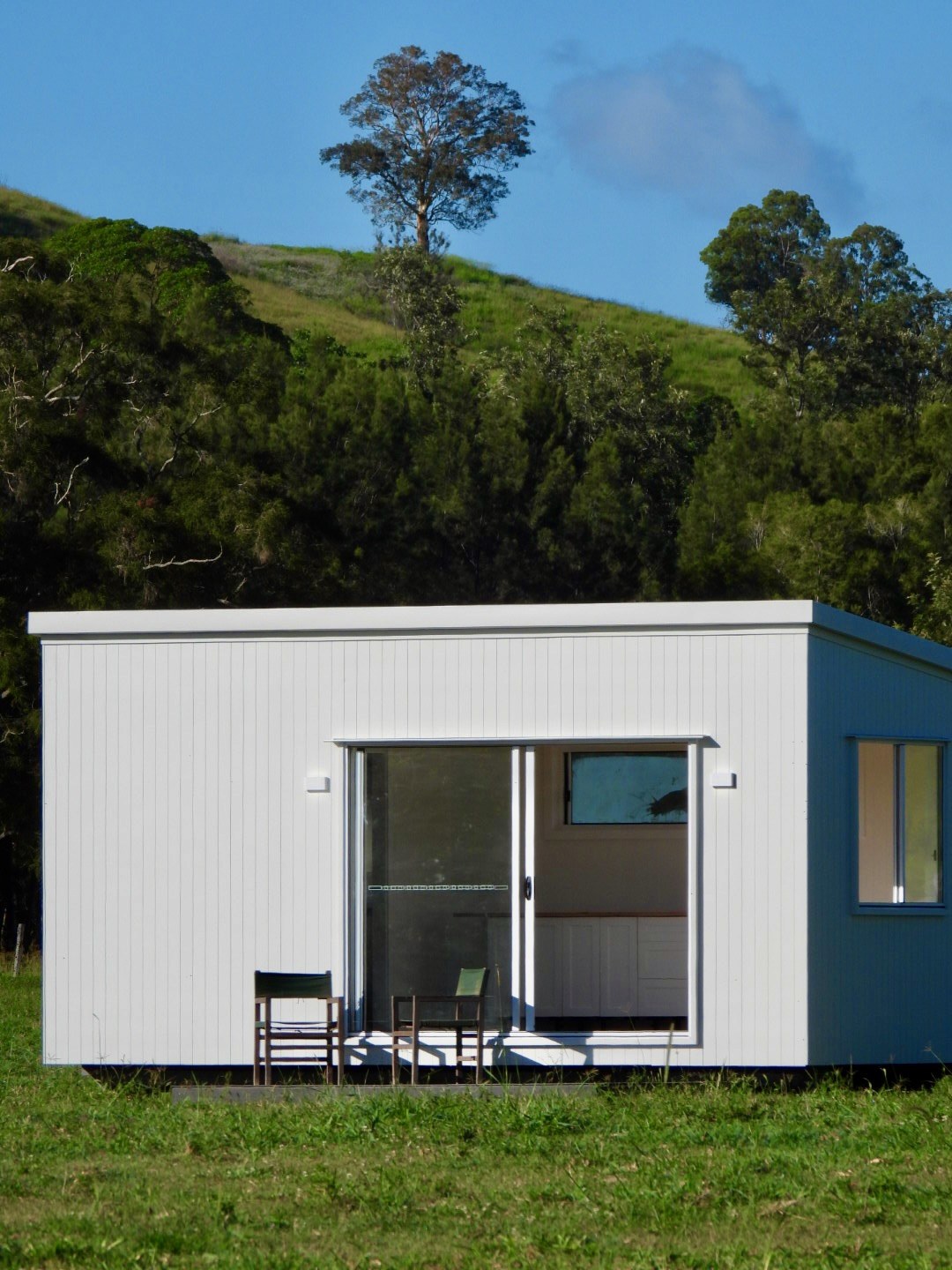
A second home that is used as an office is still a home: approved as a Class 1a dwelling, with a bathroom and a kitchen, it can be an office on Monday and a bedroom for a parent, a tenant or a child the year after, with no new approval. A backyard studio built as a Class 10a structure is a shed with good cladding, cannot be lived in, and stays that way. The difference costs more up front and buys every later use. Two rules sit on the office use. The planning scheme regulates a home-based business, and the state says a small home used as a home office or business may need a planning approval. The ATO applies its interest deductibility test: an employee working from home claims the fixed rate, 70 cents an hour in 2025-26, and keeps the full main residence exemption; a business run from a space set aside for it can claim occupancy costs and gives up the exemption on that share.
Dwelling or studio
| Second home used as an office (Class 1a) | Backyard studio (Class 10a) | |
|---|---|---|
| Built to | The dwelling rules: structure, waterproofing, energy rating, smoke alarms, plumbing | The non-habitable rules; no energy rating, no sanitary requirements |
| Approvals | Building approval and plumbing permit; a planning application only where the scheme asks | Building approval; plumbing only if plumbed |
| Can someone live in it | Yes | No |
| Can it be rented | Yes, to anyone, as a secondary dwelling | No |
| Later uses | Office, parent, child, tenant, guest, in any order | Office, storage, hobby |
| Cost | The home plus the install, $59,000 to $140,000 for the install in South East Queensland | Less, because less is in it |
The planning side of working from it
Working from home is not a planning matter. Running a business from home is: every South East Queensland scheme defines a home-based business and sets limits on employees, customers, signage and parking, and inside those limits it is usually accepted development. The state's tiny homes page lists a small home used as a home office or home-based business among the uses that may need a planning approval, which is the same rule. A consultant at a desk is inside the limits everywhere; a workshop with customers or staff is where the scheme is worth reading. The council page for each area links its scheme.
The tax side
- An employee working from home claims the ATO's fixed rate, 70 cents for every hour worked from home in 2025-26 with a record of the hours, which covers power, internet, phone and consumables. Occupancy costs, the interest and rates on the building, are not claimable this way, and the main residence exemption from capital gains tax is untouched.
- A business run from a space set aside for it, clearly identifiable and not readily adaptable to private use, can claim a share of the interest, rates and insurance. The ATO's interest deductibility test then applies: the share that would be deductible is the share of the home subject to capital gains tax when it is sold, by floor area and time. A 45 m² office on a lot with a 200 m² house is about 18% of the floor area.
- The build itself is a capital works deduction at 2.5% a year only for the days and the share it produces assessable income. Tax.
This site's view
The cheapest backyard office is the one that is also a home, because it is the only one that keeps its value when the job changes. Build it as a dwelling, plumb it, give it a door onto the yard rather than the house, and put the desk in it. The day it is needed for a person instead of a laptop, nothing has to be rebuilt.
See it for your block
Questions people ask next
Do I need council approval for a home office in my backyard?
For the building, a building approval as a dwelling or as a Class 10a studio. For the use, working from home needs nothing; running a business from it falls under the planning scheme's home-based business rules, usually accepted inside limits on staff, customers, signage and parking.
Can I claim a backyard office on tax?
An employee claims the ATO's fixed rate of 70 cents an hour for 2025-26 with a record of hours, which covers running costs but not the building. A business run from a space set aside for it can claim a share of interest, rates and insurance, and that share of the home loses the capital gains tax exemption.
Should I build a studio or a dwelling?
A dwelling, if it will ever be used for a person. A Class 10a studio cannot be lived in or rented and converting one later can cost more than building as a dwelling first. A Class 1a second home can be an office now and a home later with no new approval.
- Queensland Government, tiny homes (home office and home-based business use may need planning approval), read 16 October 2026
- ATO, working from home expenses, fixed rate method (70 cents an hour, 2025-26), read 16 October 2026
- ATO, using your home for rental or business (running a business from home, the interest deductibility test), read 16 October 2026
- ABCB, National Construction Code building classifications, read 16 October 2026
- QBCC, FAQs: tiny homes in Queensland (backyard studios and pods), read 16 October 2026
- Installer rates behind the install cost calculator, read 16 October 2026