
Bought a modular home? Check it before it lands
We install modular homes from any maker across South East Queensland. But not every home sold online, on Marketplace or straight from an overseas factory can be approved as a house here, and no amount of site work fixes that. Know exactly what you've bought, and who made it.
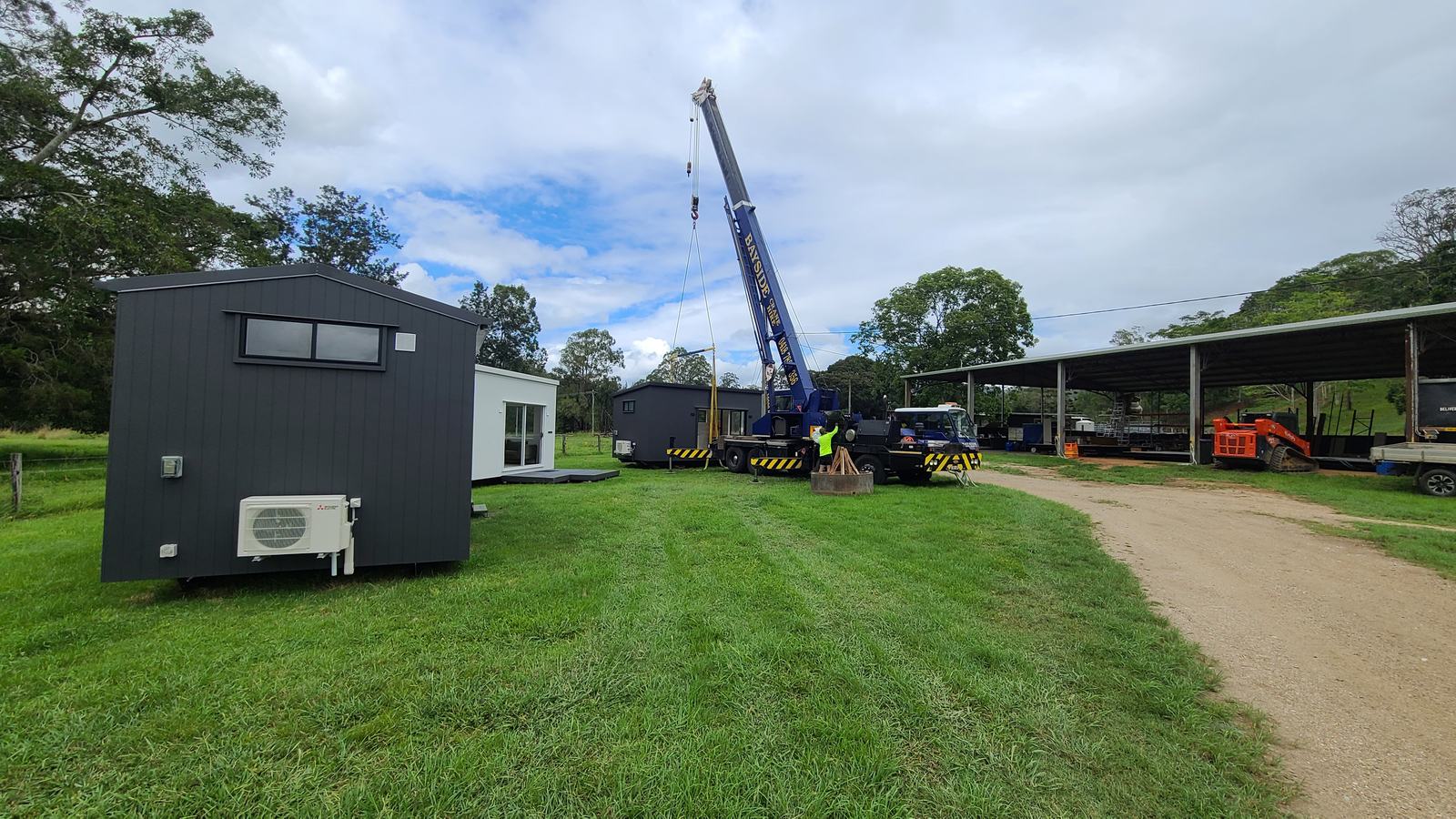
We can't promise council approval
A private certifier signs off the building and council decides planning. Not us, and not the seller. We check what you've bought before we quote and tell you straight. If a home can't be approved as a dwelling, you'll hear it from us before you spend a dollar on footings.
- A granny flat is a house. Under the National Construction Code a home you live in is Class 1a. Sheds, studios, site offices and most "cabins" are Class 10a: not for living in.
- Queensland says the same. A tiny home that doesn't meet the definition of a dwelling and doesn't have the approvals, on wheels or not, isn't considered suitable for permanent living.
- We're on the hook too. Everyone in the building product supply chain, the installer included, is responsible for products being fit for their purpose. We can't put in a home we know doesn't meet the standard.
Red flags, and what we need to see
Red flags in a listing
- "No council approval needed"
- Sold as a cabin, studio, office, expandable container or tiny home, with no Class 1a paperwork
- No Australian structural engineer's certificate
- Taps, toilets and pipes without WaterMark, or electrical gear without Australian approval marks
- No wind rating or tie-down design for your area
- The seller can't name the factory, or show you homes like it approved in Queensland
- A price far below an Australian-built home of the same size
What a certifier will ask for
- The maker and the exact modelCompany name, address, and the model and size you bought
- Plans and specificationsFloor plan, elevations, materials, and the inclusions list
- Built to the NCC as a Class 1a dwellingA statement or certificate from the maker that says so, for this home
- Structural engineering by an Australian engineer (RPEQ)Frame, tie-down and the loads for the footings
- Plumbing that can be connectedWaterMark certified fixtures and fittings
- Electrical that can be connectedWired to AS/NZS 3000, with Australian-approved parts
- Energy efficiency reportFor your climate zone
- Glazing, waterproofing and fire detailsPlus a BAL rating if your block is bushfire mapped
- For an import: evidence it's asbestos freeAsbestos is a prohibited import into Australia
If it doesn't stack up
Missing paperwork isn't always the end of it. These are the usual ways out, cheapest first. We'll tell you which one applies before you commit to anything on site.
The maker fills the gaps
Good factories can supply engineering, compliance statements and product certificates for the exact home.
An engineer certifies it
An Australian engineer assesses the home and certifies it, sometimes with upgrades to the frame, tie-downs, plumbing or wiring.
Use it as a non-habitable building
A studio, office or storage under Class 10a, if council allows it. It still needs building approval, and no one can live in it.
Don't install it
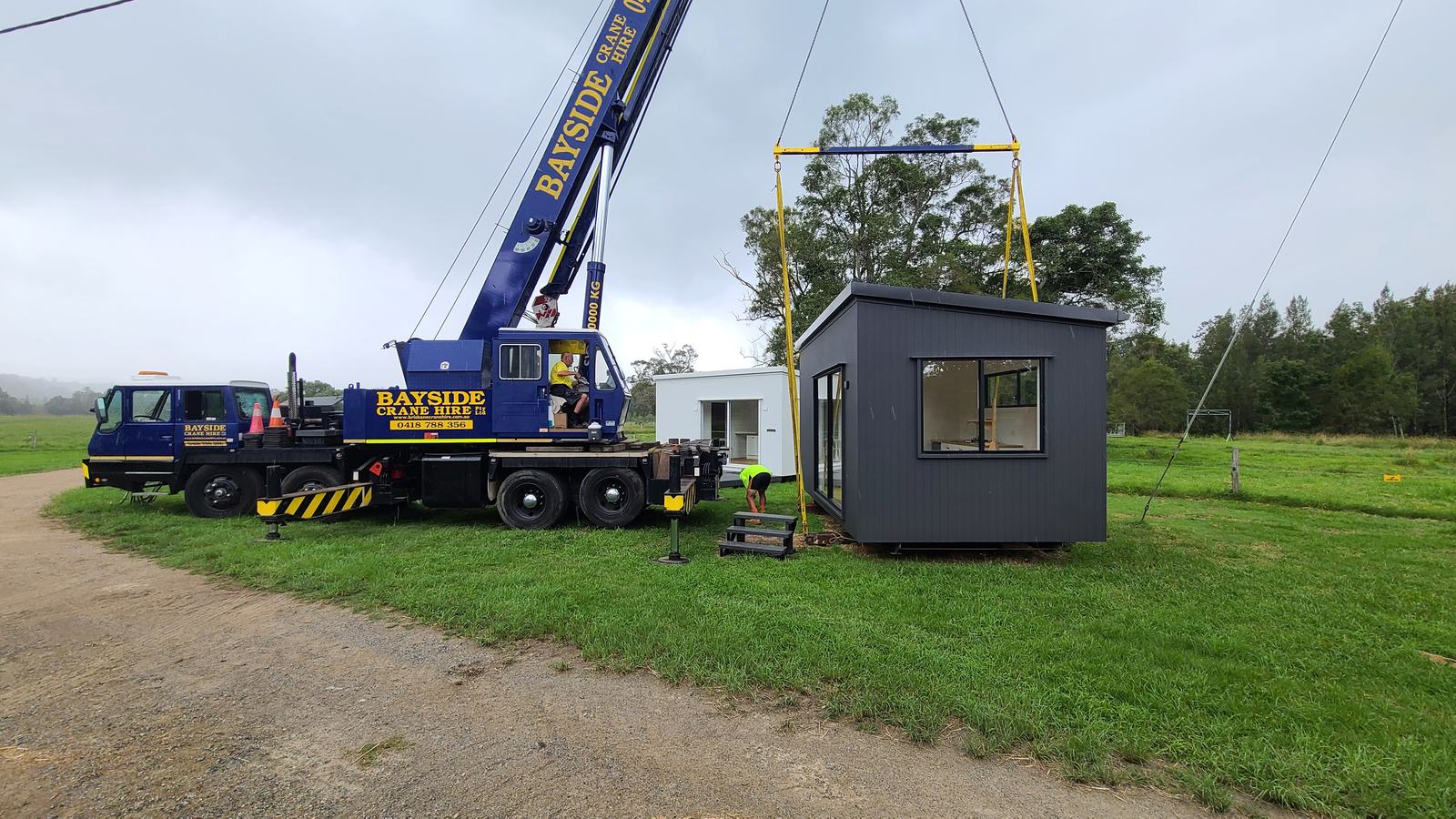
Sometimes the honest answer. Better to know before the footings than after the crane.
Haven't bought yet? Send us the listing
A link to the listing and the seller's documents is enough to start. It's far cheaper to walk away from a listing than from a home that's already landed. If you want a home that comes ready for approval, we're the authorised installer for Outhaus, whose homes are built as Class 1a dwellings in Queensland.
Sources
- Planning Queensland, Tiny homes FAQ: planning.qld.gov.au/planning-issues-and-interests/tiny-homes
- QBCC, Non-conforming building products and the chain of responsibility: qbcc.qld.gov.au/worksite-building-practice/non-conforming-building-products
- Australian Border Force, Prohibited goods: asbestos: abf.gov.au/importing-exporting-and-manufacturing/prohibited-goods/asbestos
- National Construction Code, building classifications: ncc.abcb.gov.au