
What will my install cost?
Pick your council, your home and your block. You get a low to high range for every part of the install, the working behind each one, and what's left out. Two minutes, no email needed to see the number.
$0
Inc GST, on top of the home. A guide, not a quote.| Bucket and the working | Low | High |
|---|---|---|
| Total, inc GST |
What isn't included
Email me this breakdown
Not sure it fits? Run the free block check.
These numbers assume a home built as a Class 1a dwelling with Australian certification. Bought online or from overseas? Read this first.
Who's on your approval
Every install needs a certifier and a handful of consultants. Some blocks need more. We book them, chase them and put their reports in front of the certifier, so you deal with one builder, not seven. It updates as you answer.
Every job
Your block might also need
Guide prices, inc GST, including our cost to book and manage each one. Most come from our own invoices; the ones marked indicative are market ranges until we've booked one. A quote fixes them for your block.
How we work it out
The home is one number. Getting it on the ground is the other: certification, footings, delivery and crane, plumbing and power. The block decides where you land, not the home. Two answers move it most: who signs as builder (about $10,000) and crane reach (up to about $20,000).
Every number comes from the five buckets on our installs page. Your answers pick a spot inside each range. Nothing here is a module price; the home is on top.
| Bucket | Range, inc GST | What your answers do to it |
|---|---|---|
| Certification and approvals | About $25,000 owner builder, about $35,000 licensed | Set by who signs as builder. The licensed path adds home warranty insurance, the QLeave levy and the builder's margin |
| Footings | $800 to $1,200 a pier, 6 to 18 piers | Size and modules set the count. Slope sets the price per pier, because a steep block means taller piers. Flood mapping pushes it up again, since the floor may need to sit higher |
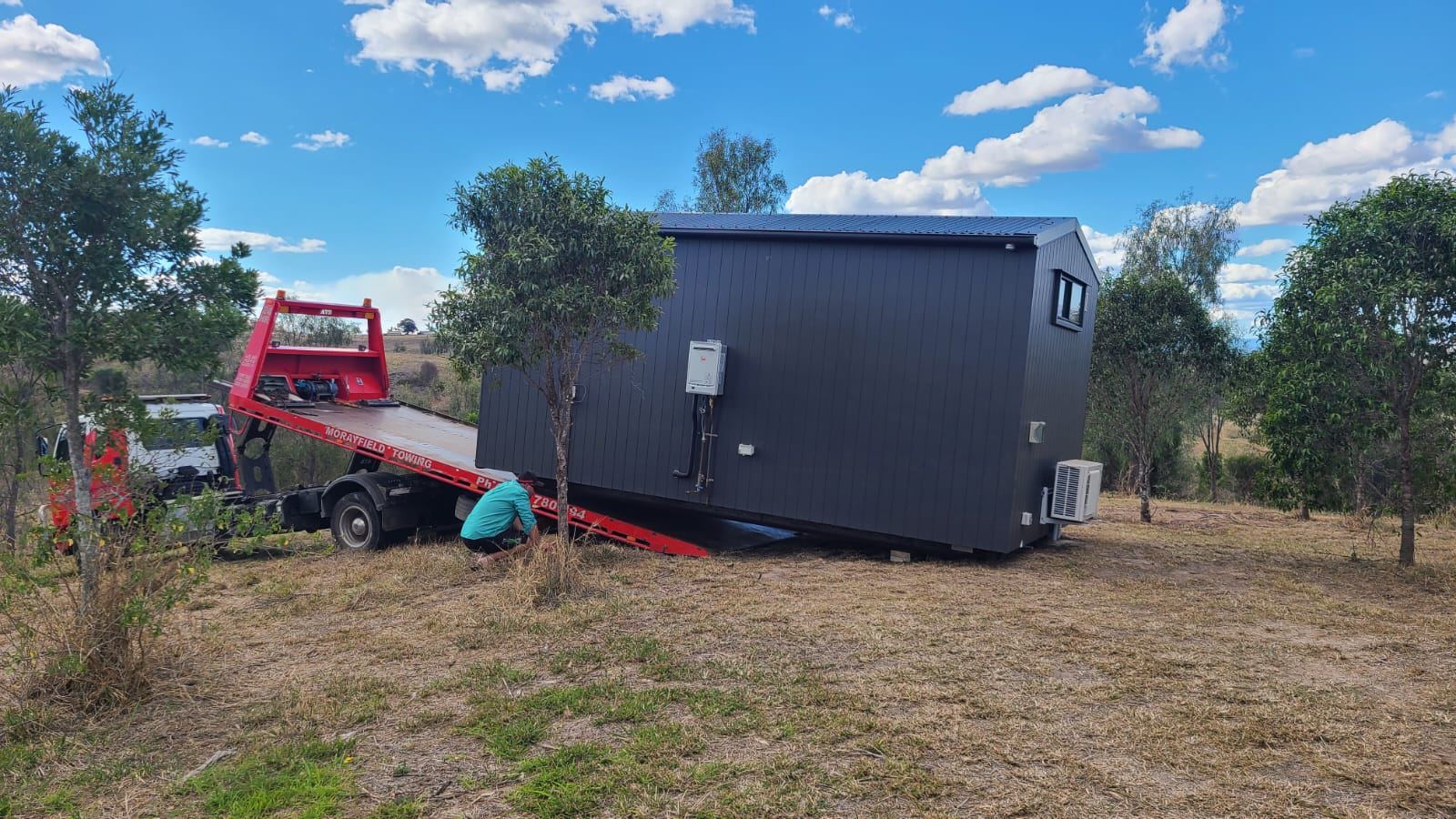
| Delivery and crane | $8,000 to $38,000 | Crane reach sets the band. Two modules mean a second truck and a second lift, a large home a bigger crane, and the Gold Coast and Sunshine Coast a longer truck run |
| Plumbing and drainage | About $16,000, about $32,000 with on-site wastewater | Sewer or no sewer |
| Electrical | $5,000 to $9,000 | Run length from the switchboard. If the board needs an upgrade we price the run at the top, and the upgrade itself sits outside this number |
| Council infrastructure charge | $0 to $36,671 | Set by council, paid to council at cost. Logan charges $26,193 up to two bedrooms and $36,671 for three or more. Ipswich charges none, the Gold Coast none up to 80 m², Redland none inside the size caps. Brisbane, Moreton Bay and the Sunshine Coast don't publish a granny flat figure, so ask |
| Joining two modules | $8,000 to $15,000 | Two-module homes only. The marriage line, flashing, the roof and wall join and the finish inside, with 2 to 4 more days on site. A second module also adds its own pier line, a second truck and lift, and runs between the modules for plumbing and power |
Bushfire and flood mapping mostly change the paperwork, not the install: a BAL assessment or a flood report, and sometimes a higher floor. Those reports are on the not-included list because the map decides them. Read bushfire ratings explained and owner builder or licensed builder before you pick a path.
Where the money goes on crane day
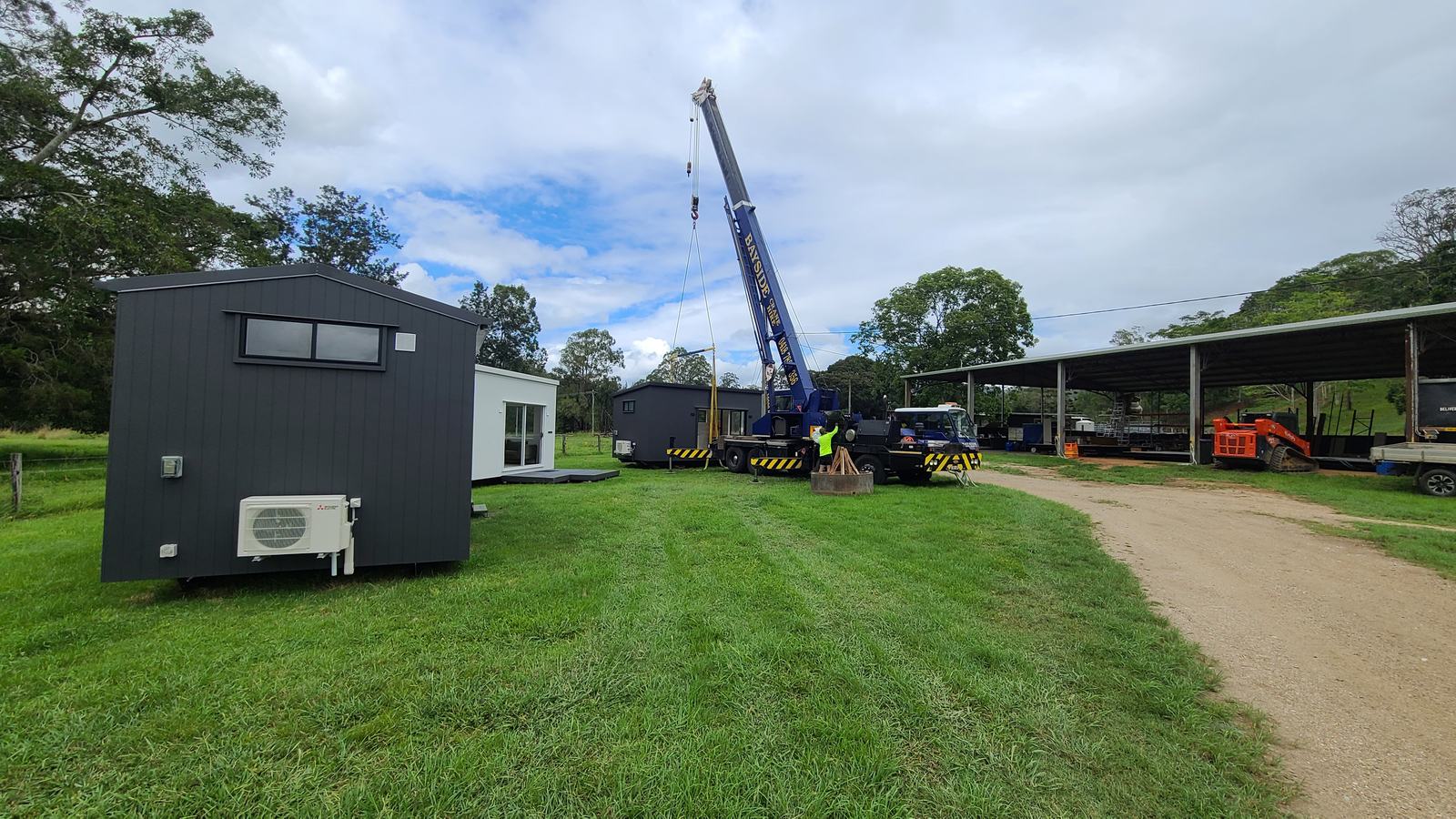
The crane is the line that swings most. A small crane for a morning is one bill. A bigger crane reaching over a roof, or one parked in a closed street with traffic control, is another. We look at access, overhead wires, trees and where the crane stands at the site check, before you're committed to anything.
Footings come next. A flat block and short piers are quick. A steep block means taller piers, more concrete and more time.
Install cost questions
Is this a quote?
No. It's a guide, inc GST, built from the ranges we see on installs across South East Queensland. A quote comes after we've seen the block, the maker's drawings and the engineering, and every line is priced in writing before you sign.
Why does a licensed builder add about $10,000?
On the licensed path the builder pays QBCC home warranty insurance on the whole job, factory build included, plus the QLeave levy and a margin for standing behind a home someone else made. As an owner builder you skip those, but you take on the builder's responsibilities and give up home warranty cover. Our owner builder guide sets out the trade.
What isn't in the number?
The home itself, which you buy from the maker. Approval extras like a development application, a town planner, bushfire or flood reports, survey and retaining. Switchboard or mains upgrades at the main house. Landscaping, turf, driveways and fencing.
What does a second module add?
More than the second module's floor area suggests. It brings its own line of piers, a second truck and a second lift, the join between the two (marriage line, flashing, roof and wall join, finishing inside, and 2 to 4 more days on site), and plumbing and power runs between the modules. Together that's usually $19,000 to $37,000 on top of a one-module install.
How many piers will my home need?
The engineer decides. A small single module usually sits on 6 to 8. A two-module home has a pier line for each module, so 12 to 18. Slope makes each pier taller and dearer, so a steep block costs more per pier as well as more in total.
Why does crane reach swing the price so much?
An easy lift from a truck parked beside the spot needs a small crane for a few hours. Lifting over the house or a long way back needs a bigger crane, and a crane in the street can need traffic control and a road closure permit. That's how delivery and crane runs from about $8,000 to about $38,000.