
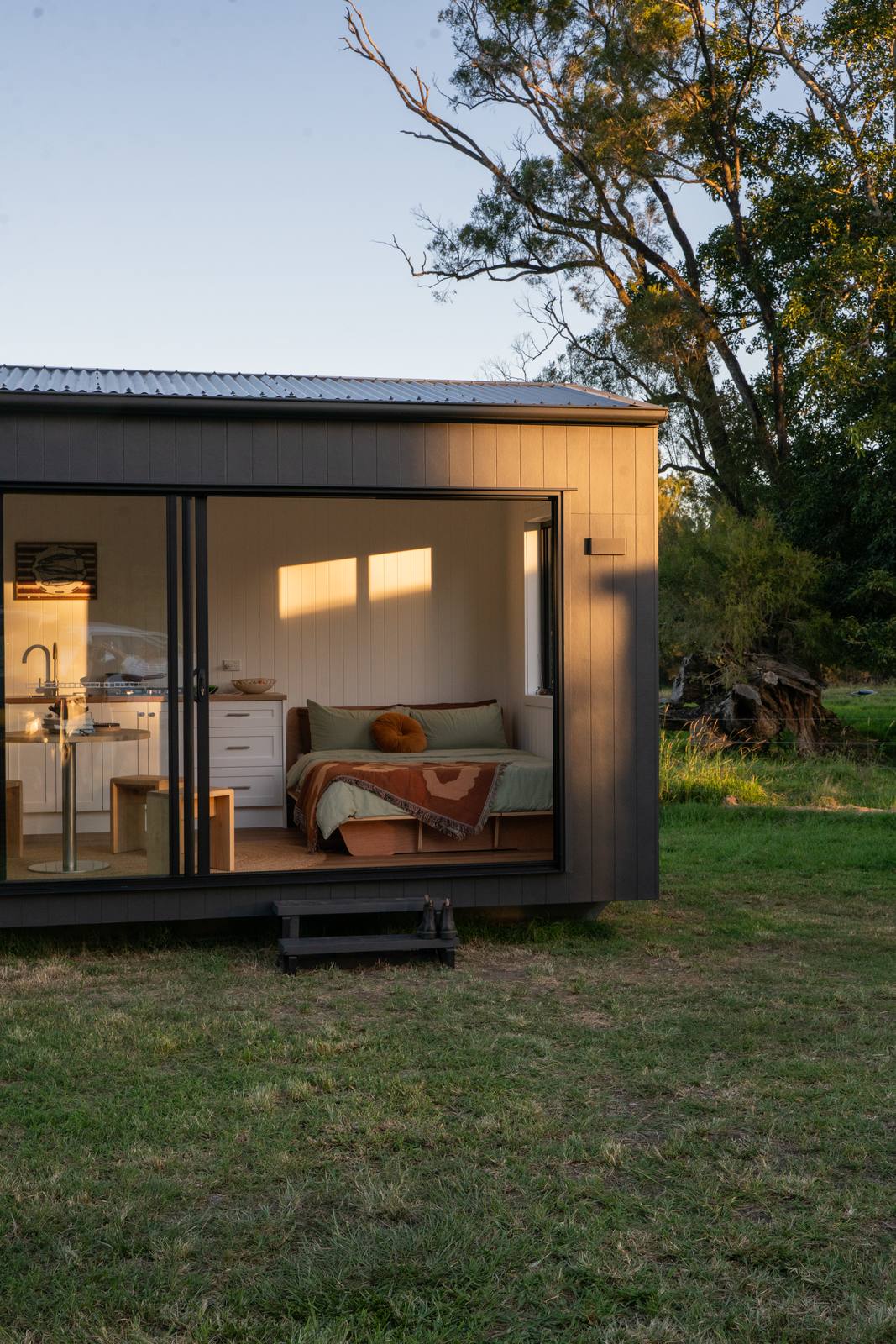
The National Construction Code sorts every building by what it is used for, and a second home has to be Class 1a: a single dwelling, a detached house or one of a row of them. Class 10a is a non-habitable building, a shed, a garage, a carport, a studio, and nobody may live in one. The class is not a label a seller picks; it follows the use, and the certifier applies the rules for that class. For a Class 1a dwelling that means structural design for the wind region, waterproofing, an energy rating, smoke alarms, a bathroom and kitchen plumbed to WaterMark fittings, and a licensed install. A Class 10a structure skips most of that, which is why it is cheaper and why calling it a granny flat does not make it one.
The two classes
| Class 1a | Class 10a | |
|---|---|---|
| What the NCC says it is | A single dwelling: a detached house, or one of a group of attached dwellings such as a town house or row house | A non-habitable building: a private garage, carport, shed or the like |
| Can someone live in it | Yes | No |
| What it must have | Structure for the site's wind class, weatherproofing, an energy rating under QDC MP 4.1, smoke alarms, sanitary facilities, ceiling heights and ventilation for habitable rooms | Structure and weatherproofing for its purpose; few of the habitable room rules |
| Approvals | Building approval and plumbing permit, planning approval if the scheme requires | Building approval; plumbing permit only if plumbed |
| Who installs | A QBCC-licensed contractor, or an owner builder with a permit, when fixed to the land | A licensed contractor over $3,300, or an owner builder |
| Home warranty insurance | On the licensed install, including the delivered home as a material | On the licensed work, as a structure |
| Can it be a secondary dwelling | Yes | No |
Why sellers say studio
Because a Class 10a building is cheaper to make. No energy rating, lighter structure, no bathroom plumbed to a standard, no fire separation. The QBCC's own list of what counts as a tiny home includes backyard studios and pods, and its answer is that all of them are subject to the same planning, building and plumbing laws as a traditional home once used as one. The state's planning page is blunter: a tiny home that does not meet the definition of a dwelling and does not have the approvals, on wheels or not, is not considered suitable for permanent living.
A Class 10a studio with a bed in it is still a Class 10a studio. The certifier will not sign it as a dwelling, the council can act against it, and the home warranty scheme does not treat its occupation as a dwelling's. The way to turn a Class 10a structure into a home is to have an engineer and a certifier assess it against the Class 1a rules and upgrade what fails, which sometimes costs more than a home built as Class 1a from the start.
What to ask before paying a deposit
- A statement or certificate from the maker that this model is built as a Class 1a dwelling to the National Construction Code, for Queensland's wind region and climate zone.
- Australian structural engineering, the energy report, WaterMark fixtures and Australian-approved electrical parts.
- For an import, evidence it is asbestos free.
The homes on this site carry a label for each: approval ready where the maker publishes its Class 1a documents, not checked yet where it does not, and not a dwelling where the maker says it is a studio or shed. Bought a module already lists what a certifier will ask for.
See it for your block
- Compare homes, with the Class 1a label on each
- Bought a module already: what a certifier asks for
- Granny flat rules in Queensland: energy, fire, flood, wind
Questions people ask next
What is a Class 1a building?
Under the National Construction Code, a single dwelling: a detached house or one of a group of attached dwellings such as a town house or row house. A granny flat built to be lived in is Class 1a and carries the structural, fire, energy and plumbing rules that go with it.
Can I live in a Class 10a studio?
No. Class 10a is a non-habitable building, a garage, shed or studio. The state's planning page says a structure that does not meet the definition of a dwelling and lacks the approvals is not considered suitable for permanent living, on wheels or not.
Can a Class 10a building be converted to a granny flat?
Sometimes. An engineer and a certifier assess it against the Class 1a rules and upgrade what fails: structure, waterproofing, energy, plumbing, electrical. The upgrades can cost more than a home built as Class 1a from the start.
- ABCB, National Construction Code building classifications (Class 1a, Class 10a), read 16 October 2026
- QBCC, FAQs: tiny homes in Queensland (same laws as a traditional home, licensed installation when fixed and used as Class 1a), read 16 October 2026
- Queensland Government, tiny homes (a structure without a dwelling's approvals is not suitable for permanent living), read 16 October 2026
- QDC MP 4.1 Sustainable buildings (the energy rating a Class 1a home needs), read October 2026
- QBCC, non-conforming building products and the chain of responsibility, read October 2026