
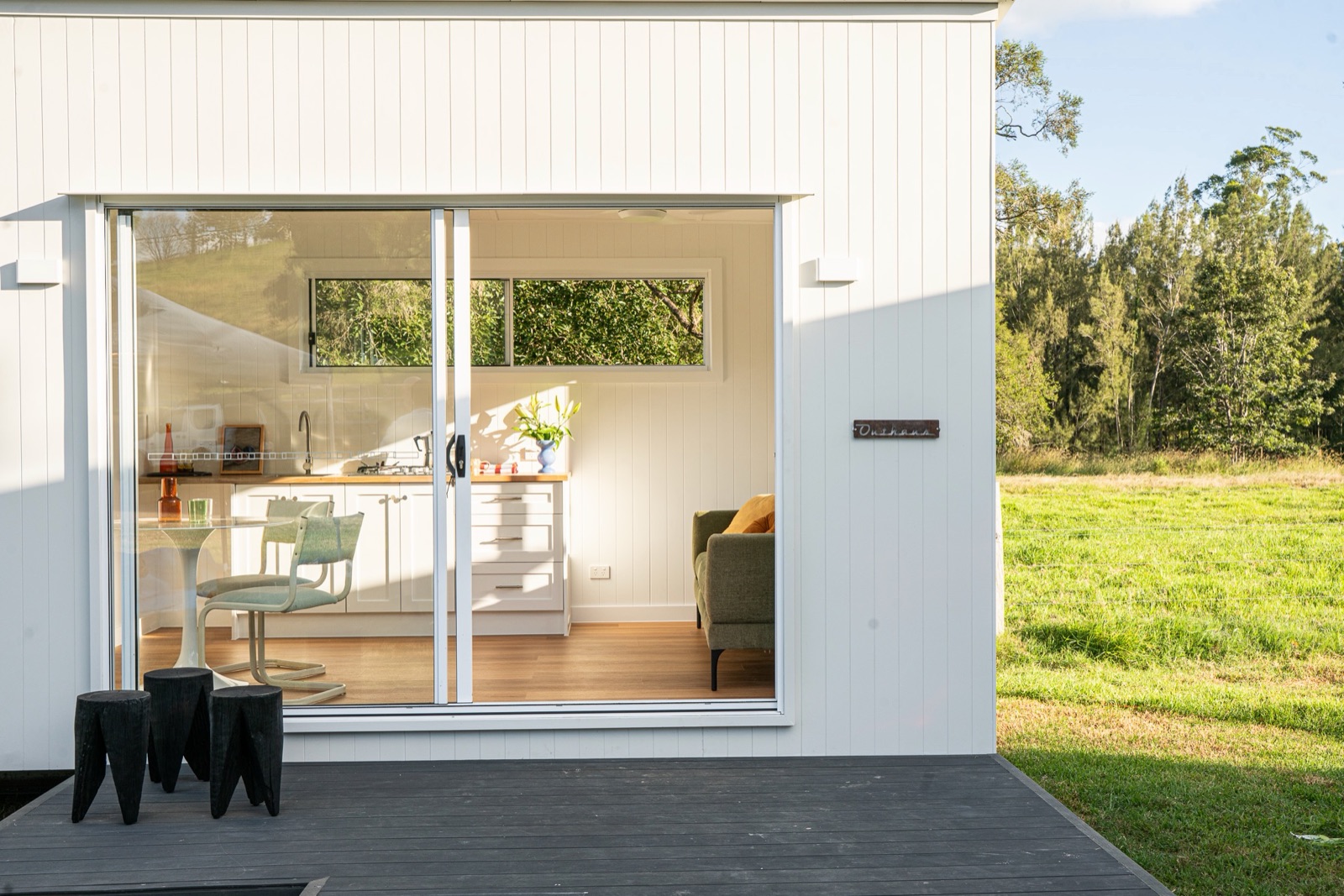
On most residential lots in Queensland, yes. The state calls it a secondary dwelling: a dwelling on the same lot as the house, used with it and subordinate to it, attached or not, and occupied by anyone. All twelve South East Queensland councils allow one. What changes from block to block is whether it can go ahead on a building approval alone or needs a planning application first, and that turns on four things: the council's size cap, the zone, the lot size, and any overlay on the maps.
The definition that makes it possible
The Planning Regulation 2017 defines a secondary dwelling as a dwelling on a lot that is used in conjunction with, but subordinate to, another dwelling on the lot, whether or not it is attached to the other dwelling or occupied by people related to the household of the main house. Every council's planning scheme in Queensland uses that definition, so the starting position is the same across the state: a second home is a normal part of a dwelling house use, not a separate business or a subdivision.
Subordinate is the word that carries the rules. It is why each council sets a size cap, why most keep it close to the house, and why it cannot be sold off on its own title.
The four things that decide it on a given block
- The size cap. Each council caps the floor area. On a typical 600 m² lot it runs from 45 m² in Moreton Bay to 85 m² in Redland, and Toowoomba sets no cap at all. Over the cap, the home needs a planning application.
- The zone. In the residential and rural zones a secondary dwelling is part of the dwelling house use. In other zones the scheme may ask for an application, or not allow it. What the zone means.
- The lot. Some councils set a minimum lot: 450 m² in Moreton Bay and Ipswich, 600 m² on the Sunshine Coast, 800 m² in Somerset. Below it the home is not accepted under the code.
- Overlays. Flood, bushfire, character, heritage and koala mapping can turn an accepted home into one that needs an application, and they change what has to be built. What an overlay is.
Two approvals sit behind every new second home no matter what: a building approval from a certifier, and a plumbing permit from council. A planning approval is the third, and only some blocks need it. Council approval, or building approval only? sets out which is which.
The caps, council by council
| Council | Cap on a typical 600 m² lot | Minimum lot |
|---|---|---|
| Brisbane | 80 m² | None set |
| Moreton Bay | 45 m² | 450 m² |
| Logan | 70 m² | None set |
| Ipswich | 60 m² | 450 m² |
| Redland | 85 m² | None set |
| Gold Coast | 80 m² | None set |
| Sunshine Coast | 60 m² | 600 m² |
| Noosa | 65 m² | None set |
| Scenic Rim | 60 m² | None set |
| Lockyer Valley | 70 m² | None set |
| Somerset | 60 m² | 800 m² |
| Toowoomba | No cap | None set |
Each council page carries the rule in full, the scheme it was read from and the date. Bigger lots and rural zones often get a bigger cap.
See it for your block
Questions people ask next
Can a second home go on any residential block in Queensland?
On most, yes. It is a secondary dwelling under the Planning Regulation 2017 and every South East Queensland council allows one. The council's size cap, the zone, the lot size and any overlay decide whether it needs a planning application or a building approval only.
Does a secondary dwelling have to be for family?
No. Since 26 September 2022 the definition says it can be occupied by anyone, related to the main household or not, in every council area in Queensland.
Can the second home be sold separately?
No. It stays subordinate to the house on the same lot and on the same title. Selling it on its own would need a subdivision or a dual occupancy approval, which is a different development.
- Planning Regulation 2017, schedule 24, definition of secondary dwelling, read 16 October 2026
- Queensland Government, secondary dwellings (granny flats): approvals still needed, who can live there, read 16 October 2026
- Planning Act 2016, section 44, categories of development, read 16 October 2026
- Brisbane City Plan 2014, dwelling house code, secondary dwelling, read 15 October 2026
- City of Moreton Bay, secondary dwelling information sheet, read 15 October 2026
- Logan Planning Scheme 2015, dual occupancy and dwelling house code, read 15 October 2026
- Ipswich Planning Scheme, dwelling house code, read 15 October 2026
- Redland City Council, amenity and aesthetics guideline, read 15 October 2026
- City of Gold Coast, City Plan, dwelling house code, read 15 October 2026
- Sunshine Coast Council, dwelling house code, read 15 October 2026
- Noosa Council, fact sheet 3, secondary dwellings, read 15 October 2026
- Scenic Rim Regional Council, dwelling houses and secondary dwellings fact sheet, read 15 October 2026
- Lockyer Valley Regional Council, dwelling houses and secondary dwellings info sheet, read 15 October 2026
- Somerset Region Planning Scheme, version 50, read 15 October 2026
- Toowoomba Region Planning Scheme, schedule 1 definitions, read 15 October 2026