
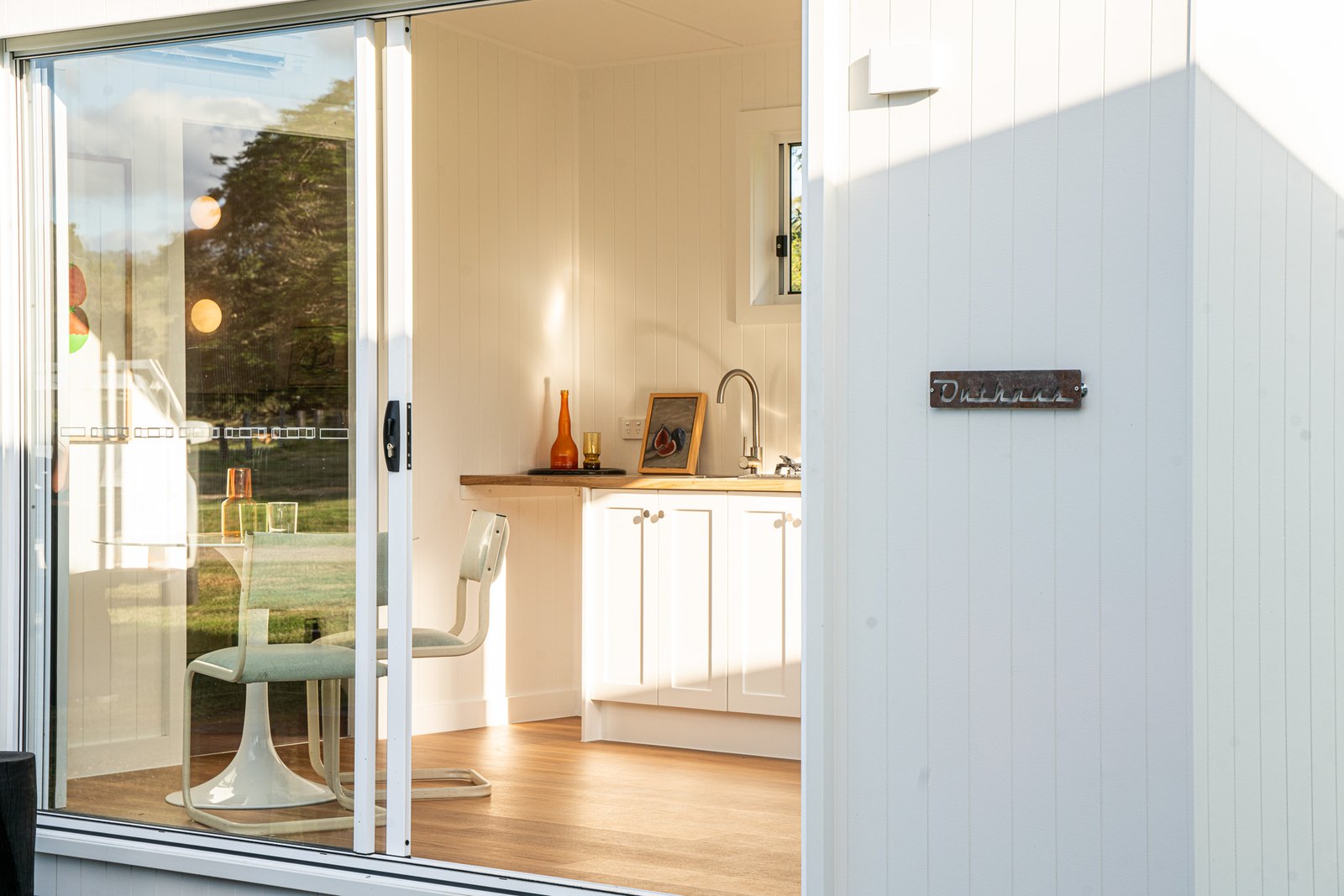
Noosa Shire runs from Sunshine Beach, Noosa Heads and Noosaville, through Tewantin and the canal streets of Noosa Waters, out to Cooroy, Pomona, Kin Kin and the hinterland acreage. Granny flats are allowed across the shire's residential and rural zones, under Noosa Plan 2020 as amended to Amendment 3 in March 2026.
Noosa is clear about what a granny flat is for: permanent housing. It caps the size at 65 m² and two bedrooms, bans short-term letting in it, and since July 2025 charges no infrastructure charge on it.
| Rule | What it says |
|---|---|
| Maximum size | 65 m² GFA and no more than two bedrooms, in every zone. Unenclosed decks, balconies and garages don't count |
| How many | One per lot, whatever the lot size. Not on a property under a Building Unit Plan |
| Distance from the house | No set distance. It has to meet the zone's setbacks, height and site cover |
| Setbacks (Low density residential) | 6 m to the road (4.5 m to one frontage on some corner lots); 1.5 m to the side up to 4.5 m high; 3 m to the rear up to 4.5 m high on lots of 550 m² or more. Noosa's own, not the Queensland Development Code |
| Height and site cover | 8 m and 2 storeys; 50% site cover for single storey |
| Parking | Three spaces on the lot in total, one can be in tandem; none has to be covered |
| Use | Permanent occupation only. No short-term letting or home hosted accommodation |
| Approval | Usually building and plumbing approval only, from a private certifier and council. A planning application if it misses a rule or sits in a constraint overlay |
When you need a planning application
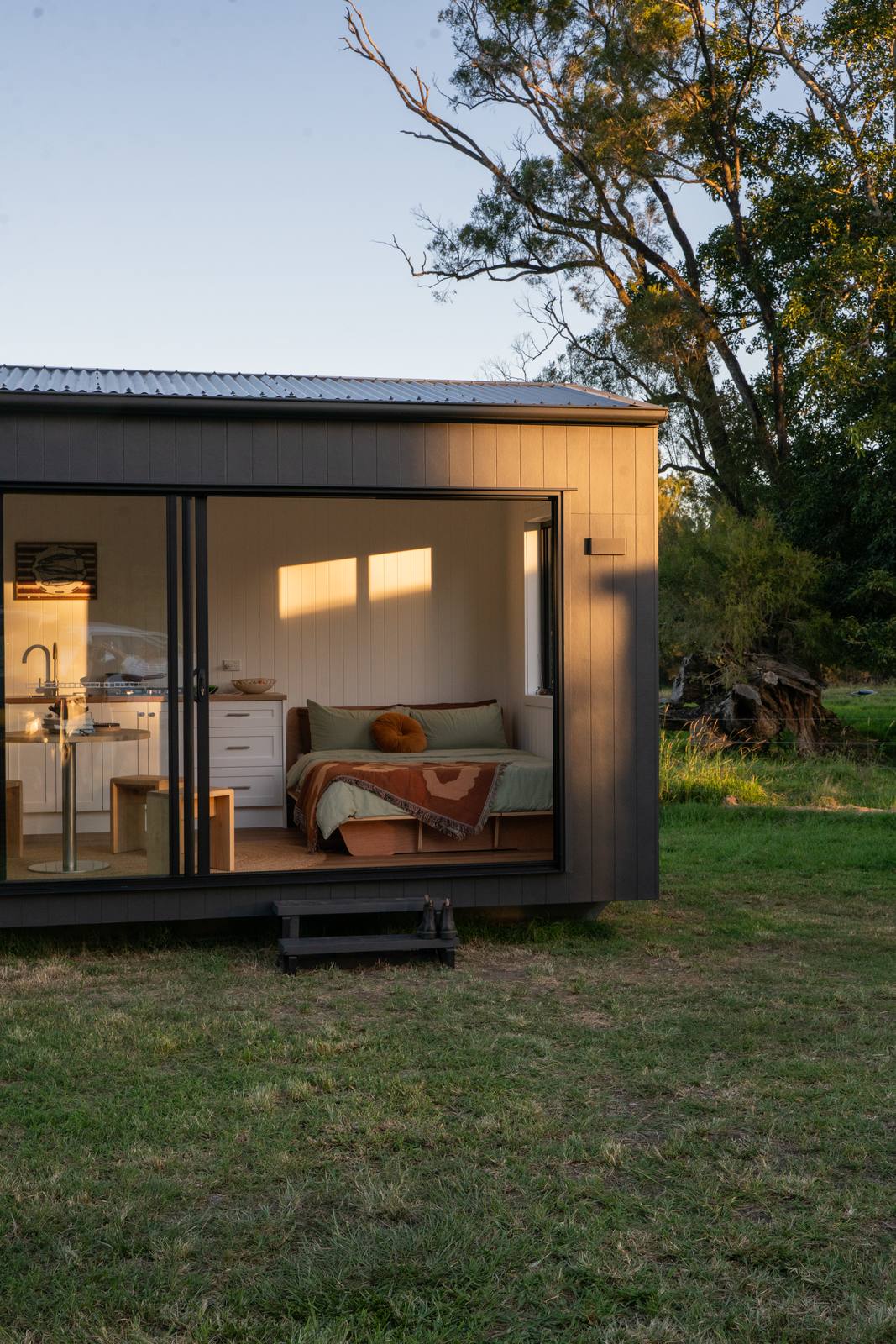
Council's secondary dwelling fact sheet says that if the design misses any of the zone requirements, such as GFA, height, setbacks or site cover, or the site is affected by a constraint such as biodiversity or coastal protection, a development application goes to council. Two design rules catch modular homes in particular: in the Low density residential zone the main roof needs a pitch of at least 5 degrees and 600 mm eaves around at least 75% of the building, outside the Coastal Communities and Noosa Heads local plan areas, and cut or fill has to stay under 1.5 m. A flat-roofed module without eaves fails the first, which turns a certifier job into a council one.
Infrastructure charges
None from council. Council resolved in May 2025 to stop issuing infrastructure charge notices for secondary dwellings from 1 July 2025, and its fact sheets confirm that infrastructure charges no longer apply to a secondary dwelling. Charges already issued before then are still payable. Unitywater runs its own water and sewer network, so confirm with Unitywater whether it has any connection charge for the job.
Overlays to watch
Flood, bushfire, landslide, biodiversity and coastal protection are the ones that change the job. On a flood-mapped lot the habitable floor has to sit at least 300 mm above the defined flood event, or 500 mm above the highest recorded flood if there's no defined level. In a bushfire hazard area without town water, a 5,000 litre firefighting supply with a 50 mm fire brigade outlet is required. Council says a granny flat should generally not go on mapped landslide land, and the zone code rules out building on slopes over 33%. Local heritage places and character areas sit in the Heritage and Character overlay. Koala habitat across South East Queensland is mapped by the state, and clearing it is regulated under the Planning Regulation 2017. Council's interactive mapping shows the zone and every overlay for a lot.
Rules that apply across Queensland
- You can rent a granny flat to anyone, not only family. The state removed the family-only test in September 2022. It still has to be secondary to the main house and can't be sold separately.
- You always need a building approval from a licensed certifier, and a plumbing approval from council.
- Queensland's new Housing Code started on 1 September 2026 with new setbacks. Each council keeps its current rules until it adopts the new code, by 1 September 2029 at the latest.
- As at October 2026, Noosa has not adopted the Queensland Housing Code. Checked October 2026 against the state's Housing Code page and council's list of Noosa Plan amendments, where the latest commenced amendment, Amendment 3 of 20 March 2026, made no policy changes.
What to check on a block
The zone, whether the home fits 65 m² and two bedrooms, the roof pitch and eaves, every overlay, where the Unitywater mains run, the slope, and whether a truck and crane can reach the spot. Each one can change the approval path or the price.
Getting a granny flat in on a Noosa block
Water and sewer: Unitywater
The Queensland Government lists Unitywater as the water and sewerage provider for Noosa, as it is for the Sunshine Coast and Moreton Bay. Unitywater says a secondary dwelling that isn't on its own lot can't get a separate water or sewer connection; it's serviced through private plumbing from the house's connection. Inside the urban boundary council requires the granny flat to connect to town water, sewer, stormwater and, where available, telecommunications.
Near a pipe or easement, Unitywater suggests ordering a Detailed Infrastructure Plan for the lot. If there are assets on it, a certifier assesses the work against the Queensland Development Code MP1.4, and if it can't comply the owner applies to Unitywater to build over or near them, with drawings and the engineer's Form 15. Unitywater says requests to build in an easement are rarely granted.
Rural and acreage lots
The 65 m² and two bedroom cap applies on acreage too: the Rural residential zone code repeats it. Rural residential setbacks are larger, generally 10 m to the road and 10 m to the side and rear, or 6 m on lots up to 1 hectare. Without town water, the lot needs rainwater tanks of at least 60,000 litres combined for the house and the granny flat. Without sewer, the granny flat needs an on-site effluent treatment and disposal system. Several tiny homes on one rural lot for permanent living count as a multiple dwelling, which Noosa doesn't support in the Rural or Rural residential zones.
Canals, the river and the coast
On the Noosa River, buildings sit at least 10 m back from mean high water spring. In the Noosa Waters estate at Noosaville, no building, filling or excavation can happen within 4.5 m of the centre line of the revetment wall. Driveways are limited to one crossover per lot, which on a narrow canal or beach lot often decides where the granny flat and its third car space can go.
Crane access in Noosa
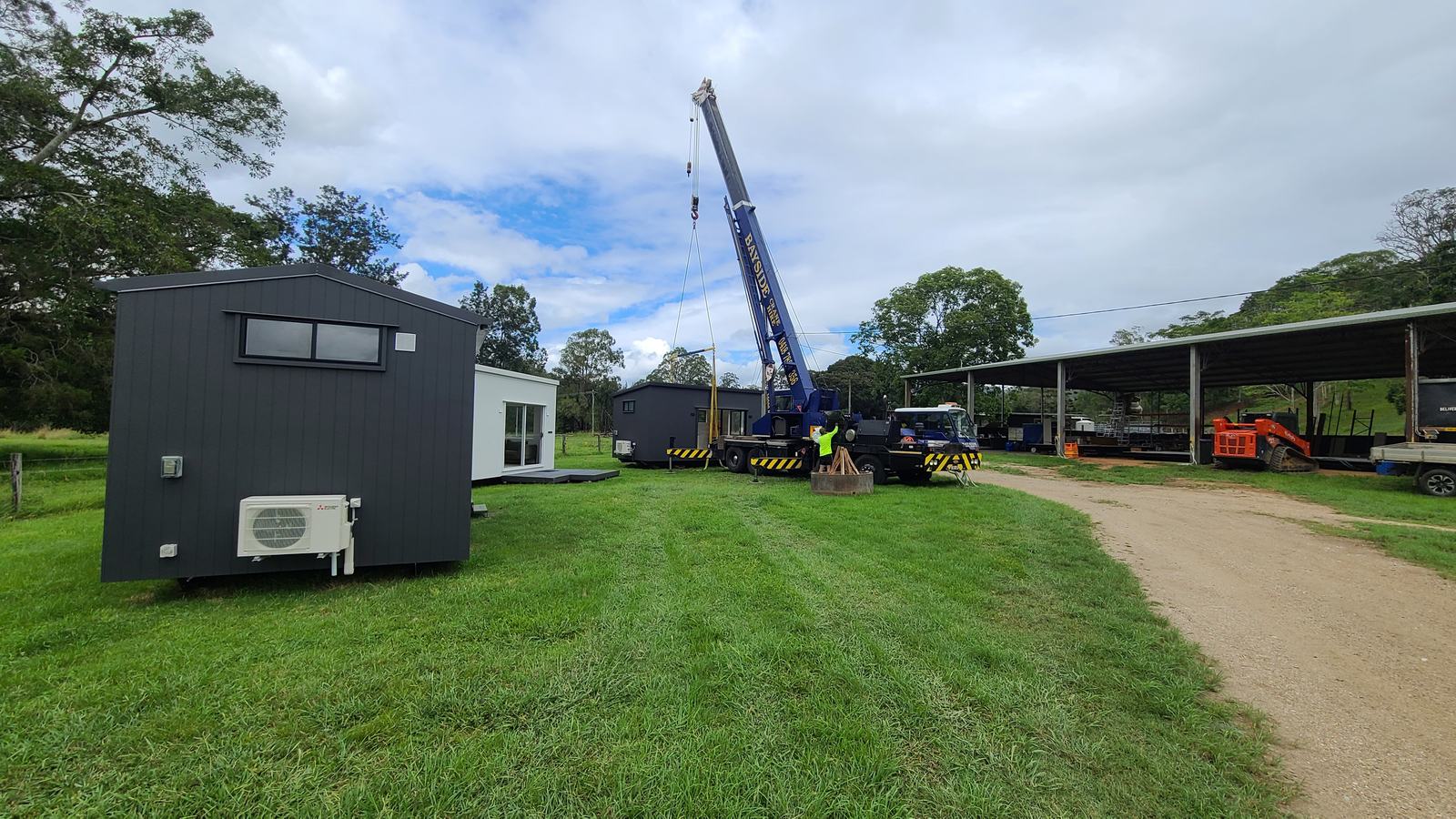
Typical blocks set the crane plan. The beach suburbs and Noosa Heads have narrow streets, tight lots, heavy vegetation and holiday traffic. Noosaville and Noosa Waters are flat, but canal lots put the yard on the water side, away from the street, so the crane often has to reach over the house. The hinterland around Cooroy, Pomona and Kin Kin brings slopes, long driveways and narrow roads where the truck size matters as much as the crane. A site visit before booking is standard.
What an install costs in Noosa
Most installs run $59,000 to $140,000 inc GST, on top of the price of the home. In Noosa the council side is lighter than most SEQ councils, with no infrastructure charge on a granny flat. The costs climb with a crane reaching over a canal-side house, a flood level that lifts the floor, a sloping hinterland lot that needs suspended floors rather than a slab, and an acreage lot that needs 60,000 litres of tanks and an on-site wastewater system. A flat suburban lot with the sewer close lands at the lower end.
Questions about granny flats in Noosa
How big can a granny flat be in Noosa?
65 m² GFA with no more than two bedrooms, in every zone. Unenclosed balconies, decks and garages aren't counted. The total GFA of everything on the lot is also capped, at 500 m² in the Low density residential zone.
Can I use it as a holiday let?
No. Noosa Plan 2020 says a secondary dwelling is for permanent occupation and can't be used for short-term accommodation or home hosted accommodation. Renting it long term to anyone is allowed.
Does Noosa charge infrastructure charges on a granny flat?
No. Council stopped issuing infrastructure charge notices for secondary dwellings from 1 July 2025. Ask Unitywater about its own connection charges.
Can the granny flat have its own water meter?
Not its own connection. Unitywater says a secondary dwelling on the same lot as the house can't get a separate water or sewer connection, so it's serviced through private plumbing.
How many car parks does it need?
Three on the lot in total: two for the house and one for the granny flat. One can be in tandem, and none has to be covered.
Do I need a planning application?
Usually not. Council says most granny flats are assessed by a private certifier as part of the building approval, with a plumbing approval from council. A development application is needed when the design misses a zone rule, such as size, height, setbacks, site cover or roof form, or when the lot is in a constraint overlay.
Can a modular or tiny home be the granny flat?
Yes. Council's fact sheets say a modular, prefabricated or fixed tiny home can be a secondary dwelling, as long as it meets the same rules, including the 65 m² cap, and has building and plumbing approval.
Read next
- Queensland granny flat rules, explained
- Owner builder or licensed builder on a modular home
- Renting out a granny flat
- What a granny flat costs in SEQ
- Free block check
- Granny flats in Sunshine Coast
- Granny flats in Moreton Bay
- Granny flats in Brisbane
Homes that fit a typical lot in Noosa
65 m² GFA and no more than two bedrooms, one per lot, on any lot size. On a typical 600 m² lot that means up to 65 m². These are the lowest installed prices among the 152 homes from 25 m² to that size on the site, on an easy block, with homes the maker says are Class 1a first.
See all homes up to 65 m² Check your own block
Rule from Noosa's planning rules, checked October 2026. Installed prices are estimates on an easy block, inc GST. Your block decides the real number.
- Noosa, Fact Sheet 3, Secondary Dwellings (Noosa Plan 2020 as amended 26 September 2025)
- Noosa, Fact Sheet 2, Building a Dwelling House
- Noosa, Fact Sheet 7, Tiny Homes
- Noosa Plan 2020, 6.3.1 Low Density Residential Zone Code (Amendment 3)
- Noosa Plan 2020, 6.8.4 Rural Residential Zone Code (Amendment 3)
- Noosa, infrastructure charges
- Noosa, Noosa Plan 2020 amendments
- Noosa, user guides and fact sheets
- Unitywater, connecting a second dwelling
- Unitywater, check before you build
- Queensland Government, secondary dwelling changes
- Queensland Government, Queensland Housing Code
- Ministerial statement, Queensland Housing Code
- Business Queensland, SEQ water and sewerage service providers
- Queensland legislation, Planning Regulation 2017 (koala habitat in SEQ)