
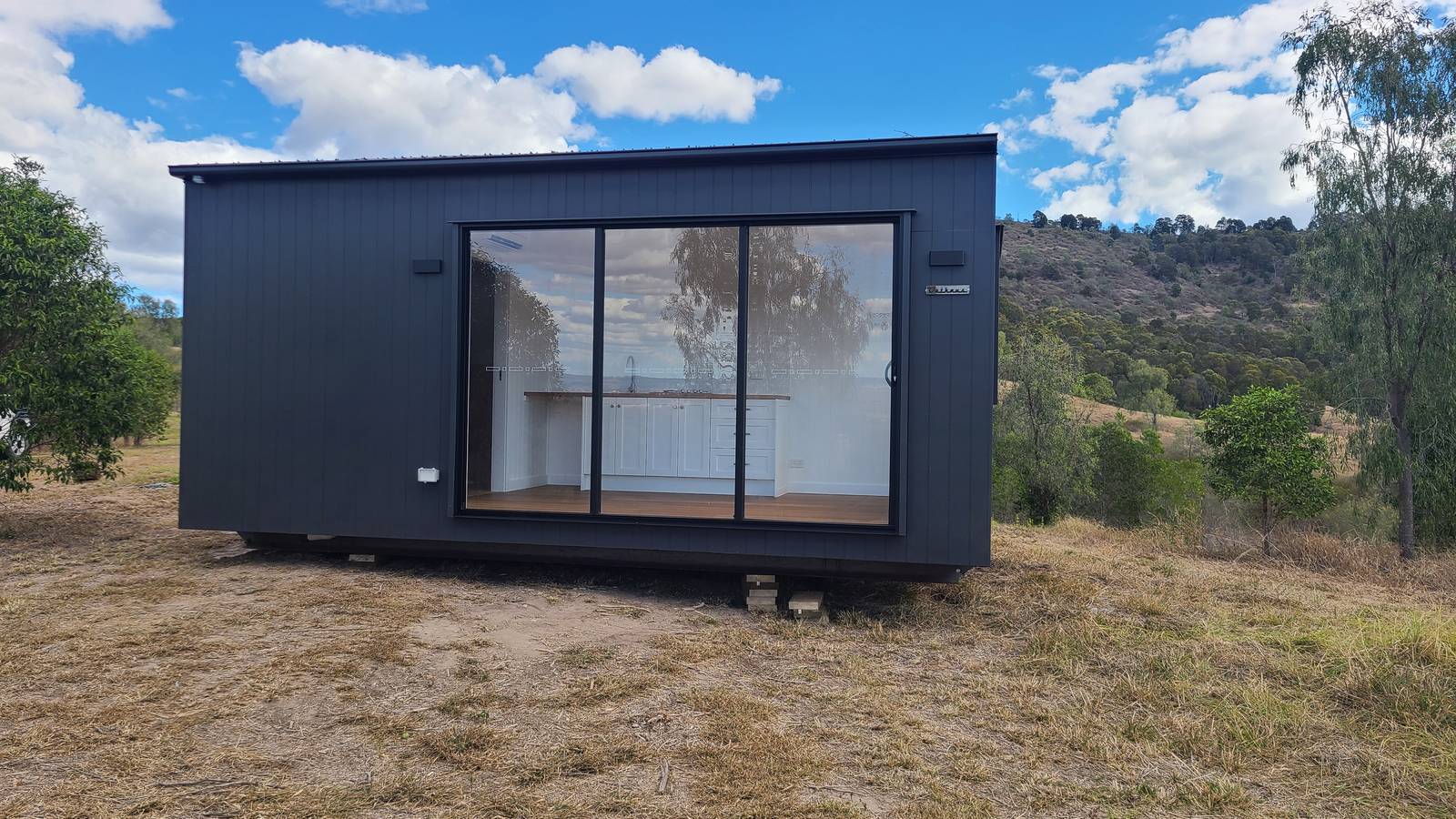
Banks lend against what they can sell, and until a modular home is bolted to the block the only thing they can sell is the land. That is why a construction loan pays a builder in stages as work appears on the lot, and why a home half built in a factory 80 km away is a problem: the stage is real but it is not on the security. Lenders answer it differently. Commonwealth Bank funds a prefab build off site, up to 80% of the contract price or 150% of the land equity, whichever is lower, when the maker is on its assessed list, and up to 60% or 120% for any other maker, with the rest released once the home is fixed and connected. Other lenders pay nothing until the home is on the block, which leaves the factory stages to cash or equity. This page is general information, not advice for a particular borrower.
The three ways to pay
- Cash. No valuations, no lender stages. Keep a buffer for provisional sums and the site costs people forget.
- Equity in the house. A top-up, a separate split or a line of credit secured on the existing home. The money comes up front or on draw, which suits a job that goes out in a few large lumps. The house is the security, so all of it is at risk if the job fails.
- A construction loan. A home loan paid out in stages against a signed building contract, plans, the approval and the builder's insurance, interest only on what is drawn, then a normal loan at the end. Lenders inspect before each stage. Progress payments sets out how the lender's stages and the law's stages have to line up.
Why a factory build breaks the usual loan
Commonwealth Bank says it on its own page: when progress payments are requested before the home is affixed to the land, the land is the sole security until the home is transported to site, and if the builder fails or goes into liquidation before then the borrower can be in negative equity and still owe the loan. Its answer is the assessed manufacturers list: makers with an onshore factory, financials the bank accepts and a factory inspection passed, at a point in time. With one of those makers the borrower can draw up to 80% of the build contract during the off-site build, capped at 150% of the land equity. With any other maker, 60% or 120%. The bank says it does not endorse any maker's work or future stability.
Westpac's published construction guide takes the older line: it pays against stages on the land, caps the first stage at 20%, no middle stage above 35%, and holds at least 10% for completion. A kit home runs into the same wall; Westpac says it will not make a progress payment for materials on site that are not yet fixed to the building. For a modular home with such a lender, the deposit and the factory stages come from cash or equity and the loan pays the install.
Owner builder jobs
An owner builder install narrows the lenders. Westpac lends to owner builders but asks for an independent adviser to cost the job and inspect each stage, owner builder construction risk insurance, and council-approved plans before the first payment, and pays only against the valuer's cost to complete. Some lenders do not lend to owner builders at all. There is no home warranty insurance to show, because owner builders cannot get it. Can I be the owner builder? covers the trade.
What to settle before signing with a maker
- Tell the lender or broker it is a secondary dwelling, modular or kit or site built, and who signs as builder.
- Ask what they lend against, whether they pay anything before the home is on the land, and how they value a lot with a second home on it.
- Put the maker's payment schedule and the installer's stages in front of the lender before signing, and ask in writing whether they fit.
- Ask the builder for a finance condition in the contract. Queensland's cooling-off period is five business days, too short to get a loan approved.
- Keep cash for the deposit, the gap between the loan and the price, and the amounts paid straight to a utility or council outside the contract.
Moneysmart says a mortgage broker must put the borrower's interests first, show more than one option and disclose commission. For a modular, kit or owner builder job, one who knows construction lending saves weeks. Paying for a granny flat has the lender detail and the questions to ask.
See it for your block
- Compare homes, priced installed
- Paying for a granny flat: cash, equity and loans
- Install cost calculator
Questions people ask next
Will a bank lend on a modular home before it is delivered?
Some will, with limits. Commonwealth Bank funds up to 80% of the build contract or 150% of the land equity during the off-site build with a maker on its assessed list, and 60% or 120% with any other maker. Lenders that pay only against work on the land leave the factory stages to cash or equity.
Why is the land the only security?
Until the home is fixed to the block, a lender cannot sell it if the borrower defaults, and a home in a factory belongs to the maker's process, not the lender. Commonwealth Bank warns that builder failure before the home is affixed can leave a borrower in negative equity and still owing the loan.
Can an owner builder get a construction loan for a granny flat?
From some lenders. Westpac asks for an independent adviser to cost and inspect the job, owner builder construction risk insurance and approved plans, and pays only against the valuer's cost to complete. Others do not lend to owner builders. Sort the finance before applying for the permit.
- Commonwealth Bank, prefabricated homes (assessed manufacturers, 80% or 150%, 60% or 120%, land as sole security), read 16 October 2026
- Westpac, guide to residential construction loans (stage percentages, owner builder requirements, materials not fixed), read 16 October 2026
- Moneysmart (ASIC), using a mortgage broker, read October 2026
- Moneysmart (ASIC), construction loan, read 16 October 2026
- QBCC, about owner building (no home warranty cover), read 16 October 2026
- Queensland Building and Construction Commission Act 1991, schedule 1B (cooling-off period), read October 2026