
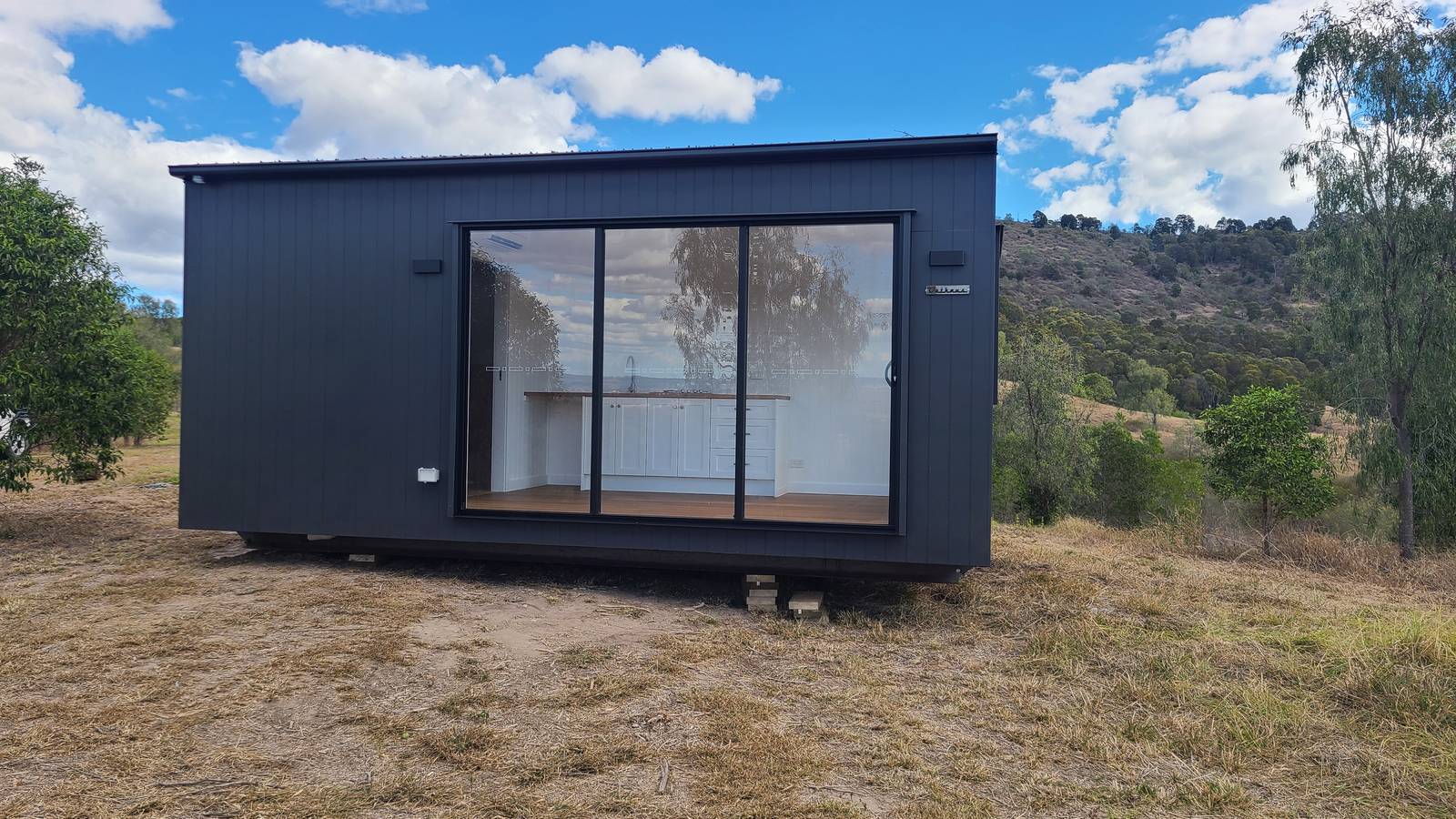
Yes, as a caravan, and the moment it becomes a home the rules change. The state's planning page draws the line: a tiny home on wheels, registered as a caravan or trailer, used for temporary accommodation and not connected to town water and sewer is a caravan, not a dwelling, regulated under the road use law and the council's local laws. A tiny home used for permanent on-site accommodation as the only dwelling or as a secondary dwelling, on wheels or not, is a dwelling: no planning approval if it meets the Planning Regulation's criteria, but building and plumbing approval as for any house. Councils decide how long someone may live in a caravan in a backyard, and the state says a home without a dwelling's approvals is not suitable for permanent living.
The two states of a tiny home on wheels
| Caravan | Dwelling | |
|---|---|---|
| What it is | On wheels, registered, temporary accommodation, not connected to town water and sewer | Used for permanent on-site accommodation, as the only dwelling or a secondary dwelling, on wheels or not |
| Who regulates it | The Transport Operations (Road Use Management) Act 1995 and the council's local laws under the Local Government Act 2009 | The planning framework, the Building Act 1975 and the Plumbing and Drainage Act 2018 |
| Approvals | None under planning or building law; local law limits on living in it | Building and plumbing approval; planning approval only if it misses the Planning Regulation's criteria |
| Fit for permanent living | The state says no, without a dwelling's approvals | Yes, once approved |
Living in the caravan
The state leaves this to each council. Its page says some local governments have made local laws to let a property owner have someone live in a caravan or temporary tiny home in the backyard for certain periods, and that each council decides for its own community. The periods, the conditions and the permits vary, so the council's local law is the document to read before the trailer arrives, and the council pages on this site point to it where a council publishes one.
Fixing it to the land
Take the wheels off, set it on piers, connect the plumbing and the power, and it is a building. The QBCC says installing a tiny home is residential construction work when it is fixed to the ground by footings, tie-downs or service connections and intended to be used as a Class 1a dwelling, so a licensed contractor or an owner builder with a permit does the install and the home warranty scheme covers the site work. The certifier then needs the same documents as for any dwelling: engineering for the wind class, an energy rating, WaterMark plumbing, Australian electrical. Many homes sold as tiny houses are built to a trailer standard rather than the National Construction Code, and the state's page lists the gaps: structure, drainage, ceiling heights, fixtures, energy, fire safety. Noosa's fact sheet says a fixed tiny home can be a secondary dwelling as long as it meets the same rules as any other, including the 65 m² cap.
More than one
Two or more permanent tiny homes on one lot are a multiple dwelling under the planning framework, which needs a planning application and is generally not envisaged on rural land, where town water and sewer are usually absent and the regional plan protects the rural area from residential development. One tiny home as a secondary dwelling is the path the state encourages; a cluster is a different development.
See it for your block
Questions people ask next
Is a tiny home on wheels legal in a Queensland backyard?
As a caravan, yes: on wheels, registered, temporary accommodation and not connected to town water and sewer, it sits under the road use law and the council's local laws, which set how long someone may live in it. Used as permanent accommodation it is a dwelling and needs a dwelling's approvals.
Can a tiny home be a granny flat in Queensland?
Yes, once it is fixed to the land and meets the same rules as any secondary dwelling: the council's cap, setbacks, a building approval and a plumbing permit. The state encourages tiny and small homes as secondary dwellings when fixed as a permanent use.
Can I put two tiny homes on my rural block?
Two or more permanent tiny homes on one lot are a multiple dwelling under the planning framework, which needs a planning application. The state's page says that is generally not envisaged on rural land.
- Queensland Government, tiny homes (caravan or dwelling, local laws, multiple tiny homes, suitability for permanent living), read 16 October 2026
- QBCC, FAQs: tiny homes in Queensland (when installation is residential construction work), read 16 October 2026
- Noosa Council, fact sheet 3, secondary dwellings (a fixed tiny home can be a secondary dwelling), read 15 October 2026
- Planning Regulation 2017, schedule 24 (secondary dwelling, multiple dwelling, relocatable home park), read 16 October 2026