
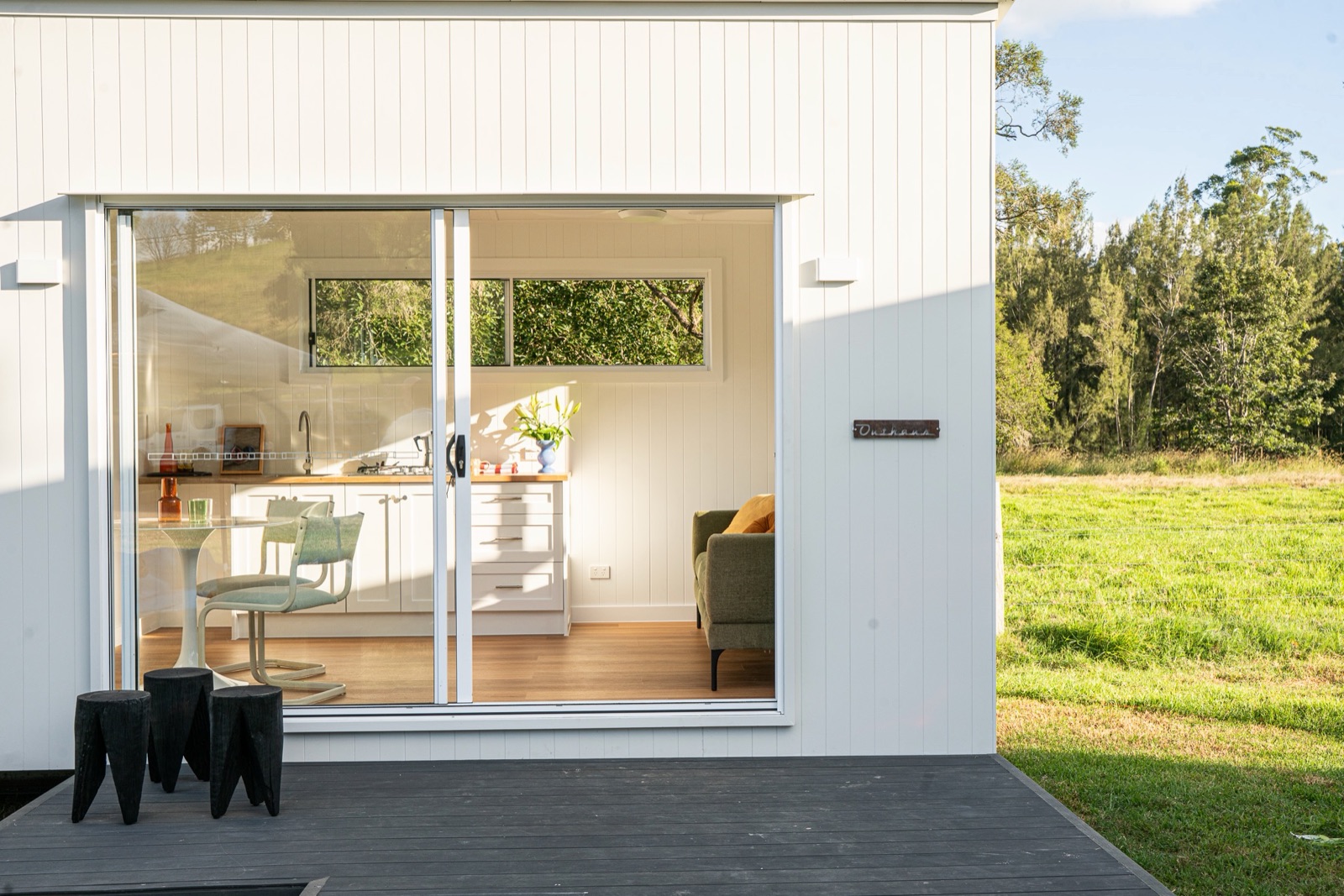
Four services connect a second home, and each has its own rules and its own licensed trade. Plumbing and drainage, water in and sewer out, is permit work: a licensed plumber lodges it with council before starting, council inspects, and the all-in cost in South East Queensland is about $16,000, or about $32,000 where there is no sewer and an on-site wastewater system has to be designed and installed. Electrical is a licensed electrician's job, $5,000 to $9,000 depending on the run from the main switchboard, with a board upgrade on top if the house's board is full. Stormwater has to reach a lawful point of discharge, usually the street or a council drain. And a separate power meter, if the flat is to have one, is an Energex connection in its own right.
Water and sewer: permit work
Queensland's plumbing law sorts work into categories, and a new building's plumbing and drainage is permit work. The plumber applies to council on the state's Form 1 before work starts; the standard application allows council 10 business days to decide, and councils that have made a fast-track declaration decide a plain sewered dwelling faster. Council inspects the drainage before it is covered and issues a compliance permit at the end. In Brisbane the 2026-27 fee for a new sewered secondary dwelling is $300 to lodge and $1,290 for up to five inspections, with a further $300 assessment where an on-site sewage facility is involved. Using the plumbing before the final inspection is an offence.
The cost is in the trench, not the fee. Where the sewer runs, how deep, and whether the home can drain to it by gravity decide the day. A main under the road, or a run around the house, is a long trench. Building over or near a sewer brings in the water authority and often a hydraulic engineer. No sewer means a treatment system and an irrigation area sized to the lot, which is why the number doubles.
Water usually tees off the house's supply. A separate meter for the flat is a choice to make before the trench closes: the RTA lets an owner charge a tenant for water only if the flat is individually metered, and some councils, the Sunshine Coast among them, require a shared meter.
Power
A licensed electrician runs a sub-main from the house's switchboard to the flat, and the length of that run is most of the $5,000 to $9,000. If the house's board has no room or no capacity, the upgrade sits outside the install price. A flat that is to have its own meter needs a Connect Application to Energex, which the electrician can lodge: a basic connection offer comes within 10 business days and stays open 45, the electrician lodges an Electrical Work Request when the site is ready, and the retailer arranges the meter. A separate meter means a second daily supply charge for the life of the flat; a sub-meter off the house costs less and still lets the agreement set out the tenant's share.
Stormwater
Roof and surface water from the new home has to be piped to a lawful point of discharge: the kerb and channel, a council drain, or an easement, not next door's yard. Where the only path runs through a neighbour's lot, Brisbane asks for the downstream owner's written consent with the application. On a flat block at the back of a lot this is the line most often forgotten in a quote.
What to get in writing
- Where the sewer connection will be made, how long the run is, and whether it is gravity or pumped.
- Whether the switchboard has capacity, and who pays if it does not.
- Where the stormwater goes.
- Whether the flat gets its own water and power meters, and what each adds.
See it for your block
- Check your block, including the sewer map
- Install cost calculator
- Renting out a granny flat: meters and charging
Questions people ask next
How much does it cost to connect a granny flat to services in Queensland?
From installer rates across South East Queensland: plumbing and drainage about $16,000, about $32,000 with an on-site wastewater system instead of sewer, and electrical $5,000 to $9,000 by the length of the run from the switchboard. A switchboard upgrade or a new Energex connection sits on top.
Does a granny flat need its own power meter?
No. Most run off a sub-main from the house's switchboard. A separate meter needs a Connect Application to Energex and brings a second daily supply charge. A sub-meter lets a tenancy agreement set out the tenant's share without a second account.
Who approves the plumbing on a granny flat?
Council. A new dwelling's plumbing and drainage is permit work under Queensland's plumbing law: a licensed plumber lodges the application before starting, council inspects at set stages and issues a compliance permit at the end.
- QBCC, regulated plumbing work requirements (permit work), read October 2026
- Business Queensland, supporting documents for plumbing and drainage permit applications (Form 1, decision times), read October 2026
- Brisbane City Council, plumbing and drainage fees 2026-27, read 16 October 2026
- Energex, new connections (Connect Application, offer within 10 business days, Electrical Work Request), read 16 October 2026
- Business Queensland, electrical licences, read October 2026
- RTA, water charging (individual metering), read October 2026
- Brisbane City Council, property owner's statement of consent for a lawful point of discharge through another lot, read 16 October 2026
- Installer rates: plumbing, on-site wastewater, electrical (South East Queensland, 2026), read 16 October 2026